A lice fairy can find head lice and comb them and their nits out of the hair, but a comb-out alone can’t be relied on to end a case. The AAP’s guide for parents says the comb-out method “usually doesn’t work on its own to get rid of head lice.” That matters because a live egg left behind can hatch in about a week. Before you hire anyone, know what the visit covers, what it leaves to you, and what to check afterward.
Does a Lice Fairy Kill Lice or Just Remove Them?
A comb’s job is to remove lice and nits, while killing lice is the job of a treatment. “Lice fairy” is a casual nickname for someone who does the combing for you, and the name alone doesn’t tell you about their training, their method or what the visit includes. The CDC’s treatment guidance describes nit combs as a way “to remove nits and lice from the hair shaft,” while its overview of head lice says “successful treatment will kill crawling lice.”
That distinction gives you a useful question for anyone who offers to help: what, if anything, goes on the hair? The CDC says it does not have scientific evidence that suffocating lice with mayonnaise, olive oil, margarine, butter or similar substances works as a treatment. The AAP advises against home remedies because no studies prove they work, and it says never to use gasoline, kerosene or medicines made for animals.
If a helper suggests a lice medicine, pause before anyone applies it. The AAP says to check with your child’s doctor before beginning any head lice treatment and to follow the package directions exactly as written. It also says medicine should be applied by an adult, and that a child should never be left alone with medicine in their hair.
What a Comb-Out Can and Can’t Handle
A comb-out can help you find and remove lice, but it can’t carry the whole job. Here’s how combing lines up with what a family needs during a case:
| What you need | Can a comb-out do it? | What the guidance says |
|---|---|---|
| Find lice and nits | Yes, with care | A fine-tooth comb can help you search the scalp section by section, the AAP says. |
| Remove lice and nits from the hair | Yes | The CDC names nit combs as the tool for this step. |
| End the case by itself | Not reliably | The AAP doesn’t count on combing alone to get rid of lice. |
| Cover the weeks after treatment | Only if repeated | The CDC advises checking hair and removing nits and lice every 2 to 3 days for 2 to 3 weeks after each treatment. |
| Protect the rest of the household | Only if every head is checked | The AAP says all household members and close contacts should be checked and treated if necessary. |
| Settle a doubtful sighting | Sometimes | Spotting a live louse can settle it. If you are not sure, the CDC says to see your healthcare provider. |
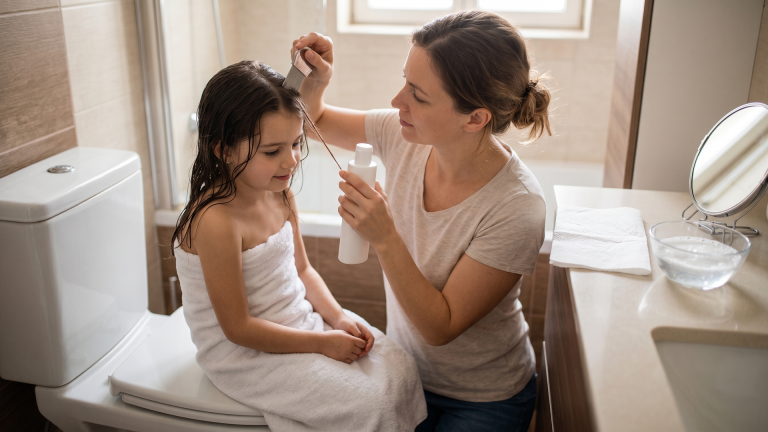
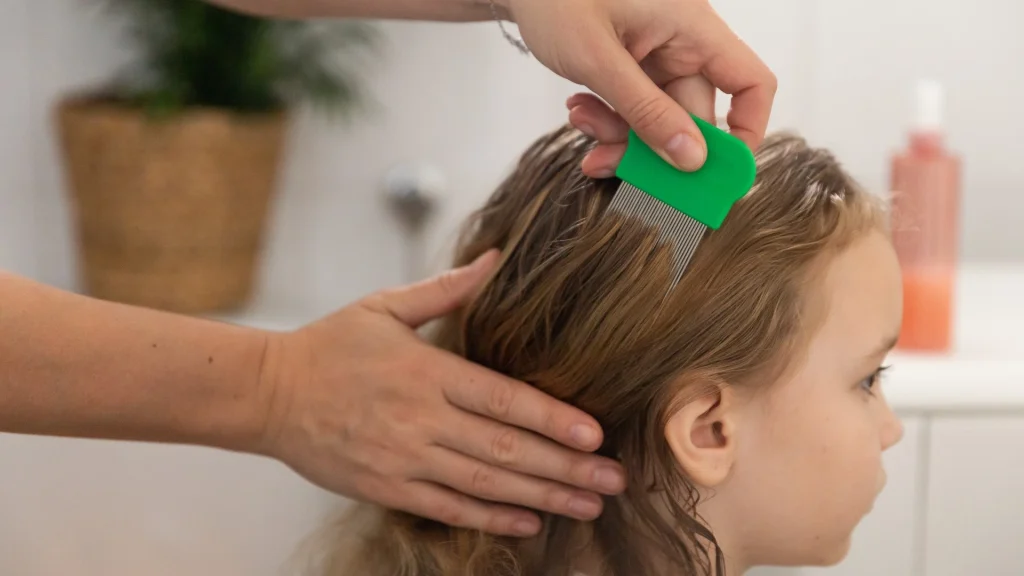
Quality matters in the parts a comb can cover. The AAP’s comb-out method starts with wet hair and a fine-tooth comb moved through small sections, with the comb wiped on a wet paper towel after each pass so the scalp, comb and towel can all be examined. It also calls for a brightly lit room and names the hairline at the back of the neck and the area behind the ears as the easiest places to look.
Telling a nit from something harmless takes care too. The CDC says misdiagnosis of head lice is common, and that nits get confused with dandruff, hair spray droplets and dirt. The AAP’s test is simple: nits are firmly attached to the hair, and the look-alikes are not.
Why One Comb-Out Can Miss the Next Round of Lice
One comb-out can miss the next round because any live egg it leaves behind keeps developing after the session ends. According to the AAP, nits attach to the hair with a sticky substance that holds them firmly in place, and some blend in with a person’s hair color, which makes them hard to see.
The timing explains why a missed egg matters. The CDC says nits take about a week to hatch, with a range of 6 to 9 days, and the young lice take about seven more days to mature into adults. The AAP’s estimate for hatching runs a little longer, at 7 to 12 days depending on temperature. An adult female can then lay about six eggs a day by the CDC’s count, or up to 10 by the AAP’s. You can follow each stage in our guide to how the head lice life cycle lines up with treatment.
Where a nit sits on the hair also tells you something. The CDC says nits attached more than a quarter inch from the base of the hair shaft are “almost always hatched or dead,” and that a head with no live lice and only those distant nits probably has an old case that doesn’t need treatment. That measure can be harder to apply on some heads, so if your child has thick or braided hair, read why those styles complicate the quarter-inch nit rule before drawing a conclusion.
What to Ask Lice Fairies on Long Island Before You Book
Ask what the visit covers from start to finish, because the nickname won’t tell you. Whether you’re comparing lice fairies on Long Island or weighing a clinic, these questions show you what you’re getting:
- What goes on the hair? Get the name of anything they plan to apply so you can run it past your child’s doctor first.
- Will you comb every section? Ask specifically about the back of the neck and behind the ears.
- How do you clean your combs between heads? The CDC’s standard for combs and brushes used by someone with lice is a soak in hot water of at least 130 degrees Fahrenheit for 5 to 10 minutes.
- Will you look at everyone at home? A household member with an unnoticed case can pass lice back after one child is treated.
- What’s the plan for the weeks after? A good answer names what to look for and when to call your child’s doctor.
- Can you work around extensions? If your child wears them, read what to mention about hair extensions before a visit.
A clear, specific answer to each question is a good sign. If someone promises that one quick pass will end the case, keep asking, since that promise goes further than the AAP’s guidance on combing.
What Should You Watch for After the Comb-Out?
Watch for live, crawling lice, because the CDC calls finding a live nymph or adult louse the best way to diagnose a case. They can be hard to catch. The AAP notes that they avoid light and move quickly, so a slow look through one section at a time beats a quick glance.
Nits alone don’t settle the question. The AAP explains that empty nits stay on the hair shaft after the eggs hatch, so a nit you find later may be an old shell. Our guides on what dead nits look like after treatment and what nit color can tell you about progress can help you read what you’re seeing.
Itching isn’t a dependable scorecard either. The AAP says itching from lice can last for weeks after the lice are gone, and the CDC says people with lice may not have symptoms, particularly with a first or light case. On a first case, itching may take four to six weeks to appear, which is one reason it can be hard to work out how long lice have been in your child’s hair.
If you still see live lice after treatment, call your child’s doctor before trying again. The CDC lists these possible reasons a treatment fails:
- Misdiagnosis
- Recent use of conditioner or a combination shampoo and conditioner
- Not following the treatment instructions
- Head lice resisting the medication
- Reinfestation after successful treatment
Your child’s doctor can help work out which one applies and whether to repeat the same medicine or switch to a new one.
Frequently Asked Questions
Is a nit fairy the same as a lice fairy?
For practical purposes, yes. Treat “nit fairy” and “lice fairy” as two nicknames for hands-on lice and nit removal, then ask the person what their service includes. Neither name is a medical title, so it can’t tell you how a visit will go or whether a treatment step is part of it.
Will a lice fairy come to my house on Long Island?
That depends on the person you hire, so ask before you book. Lice Lifters of Nassau County works differently, since families come to our clinic for their appointment. If a home visit matters to you, ask how the helper checks each head, cleans their combs and follows up once the visit is over.
Is a lice fairy or professional lice removal better for my family?
The better choice is the one that covers your whole case, so compare what each includes instead of the label. Look for a check of everyone at home, a clear treatment step and guidance for the weeks ahead. Questions about medicine or a case that won’t resolve belong with your child’s doctor.
Can you use lice shampoo two days in a row?
Not unless the label or a healthcare provider tells you to. The CDC says not to re-wash hair for 1 to 2 days after removing lice medicine, and a few lice still moving slowly 8 to 12 hours after treatment don’t mean you need to reapply. Retreatment timing varies, and the CDC puts it at about 7 to 9 days for medicines that don’t kill eggs.
Does everyone at home need a lice check?
Yes, everyone at home and other close contacts should be checked. The CDC advises treating every person with an active case, plus anyone they share a bed with, at the same time. There’s no reason for embarrassment, because the CDC says getting head lice has nothing to do with how clean you or your home are.
Can head lice live on your hands?
No, hands aren’t where head lice live. The CDC places them on the scalp, with the eyebrows and eyelashes as other possible spots. They move by crawling, so one could end up on your fingers during a check, but a louse that falls off a person and can’t feed will die within two days.
How Lice Lifters of Nassau County Can Help
If you’d rather not sort this out alone, Lice Lifters of Nassau County can take it from here. Our clinic checks the whole family and gives a non-toxic professional lice treatment in one visit. We offer same-day appointments for the moment you find something and would rather not wait. The 30 Day Guarantee applies when the whole family is checked. If your child has sores on the scalp or a medical concern, check with their doctor. When you’re ready, you can book a head check with our team. Tell us about anything a previous helper used or did, so we can start with the full picture.